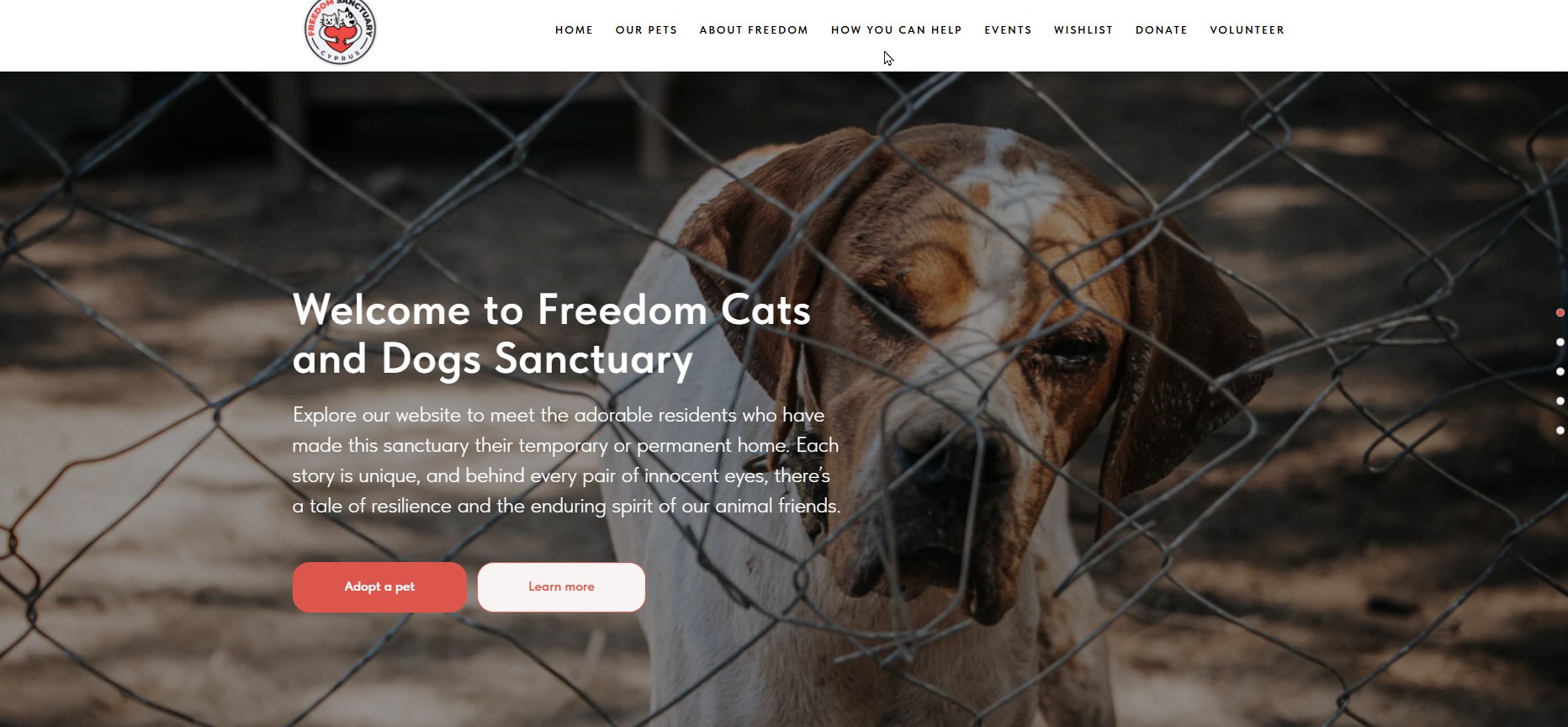
The Hidden Cost of Animal Rescue: How Veterinary Bills Can Decide the Future of a Cat or Dog at Freedom Sanctuary
Read Time:21 Minute, 56 Second
When most people think about supporting an animal sanctuary, the first expense that comes to mind is usually food.
And understandably so.
A sanctuary caring for large numbers of cats and dogs needs an enormous amount of food every week. There are bowls to fill, bedding to replace, shelters to maintain and countless everyday costs involved in keeping animals comfortable and safe.
But one of the biggest, least predictable and potentially most difficult expenses facing an animal rescue organisation is often something else entirely.
Veterinary care.
For Freedom Cats and Dogs Sanctuary in North Cyprus, the organisation behind DomDog.org, veterinary treatment forms an essential part of rescuing injured, abandoned, sick and disabled animals.
A dog found beside a road does not arrive with an insurance policy.
A stray cat requiring surgery does not come with savings.
An abandoned puppy cannot pay for medication.
When Freedom takes responsibility for an animal requiring medical treatment, somebody has to meet that cost.
And that is where supporters can make an extraordinary difference.
Rescue Does Not End When an Animal Reaches the Sanctuary
Finding an injured animal and bringing it somewhere safe is only the first stage of rescue.
In many cases, it may actually be the least expensive stage.
Once the animal is safe, the real questions begin.
Has it suffered internal injuries?
Does it have broken bones?
Is there an infection?
Does it require pain relief?
Does it need surgery?
Is the animal dehydrated?
Does it need blood tests?
Does it have parasites?
Does it require vaccinations?
Will it need medication for several weeks?
Can it walk normally?
Will further veterinary appointments be required?
The sanctuary may not know the answers until a veterinarian examines the animal.
Suddenly, what began as one rescued dog or cat can become a substantial financial commitment.
This is the reality behind many rescue stories.
The public may see the photograph of an animal being carried to safety.
What they do not always see is the veterinary invoice that follows.
Every Emergency Creates an Unexpected Bill
Routine expenditure can usually be planned.
A sanctuary can estimate how much food will be required.
It can budget for cleaning products and ordinary supplies.
Veterinary emergencies are different.
They do not arrive according to a timetable.
An injured animal may appear today.
Another may require emergency treatment tomorrow.
A permanent resident could suddenly become ill.
A dog recovering well from one condition could develop another.
This unpredictability makes veterinary costs particularly challenging for small charities.
There may be no opportunity to fundraise first and provide treatment later.
When an animal is suffering, decisions often have to be made immediately.
The veterinary care comes first.
Finding the money follows.
Imagine Finding an Injured Dog Beside the Road
Consider what happens when somebody discovers a badly injured dog.
The immediate priority is getting the animal away from danger and arranging professional veterinary assessment.
The first consultation is only the beginning.
The veterinarian may recommend diagnostic tests.
There could be X-rays.
Blood work might be required.
The dog might need sedation.
If a bone is broken, surgery may follow.
There may then be medication, dressings, follow-up examinations and rehabilitation.
What initially looked like a single veterinary visit has become an entire course of treatment.
And throughout that process, the sanctuary also has to continue caring for every other animal already relying upon it.
This is why emergency veterinary appeals are so important.
Helping fund one treatment does not merely support one animal.
It protects the sanctuary’s wider resources too.
The Alternative Is Unthinkable
Animal rescue organisations face an extraordinarily difficult position.
When a badly injured animal arrives, the question should ideally be:
What treatment does this animal need?
It should not have to become:
Can we afford to save it?
But veterinary medicine costs money.
Veterinarians need equipment.
Medicines have to be purchased.
Diagnostic tests involve laboratories and specialist equipment.
Operations require trained professionals, anaesthesia, facilities and follow-up care.
These costs are unavoidable.
For a sanctuary dependent upon donations, the ability to say “yes” to treatment can therefore depend heavily on public support.
Every person helping contribute towards veterinary costs makes it easier for the rescue team to make decisions based on welfare rather than finances.
Veterinary Treatment Is Where Donations Become Something Tangible
It is sometimes difficult to understand exactly what happens when somebody donates a relatively small amount to an animal charity.
The answer becomes much clearer when looking at veterinary care.
A donation can contribute towards an examination.
Another can contribute towards medication.
Several supporters together can help fund diagnostic testing.
Dozens of smaller donations may collectively cover an operation.
The important word is collectively.
Animal rescue does not require every supporter to pay an entire veterinary bill.
Ten people contributing a manageable amount can achieve what one person might struggle to afford.
One hundred people making modest contributions can create a significant emergency veterinary fund.
That is the power of community-supported rescue.
£5 Does Matter
People sometimes hesitate to donate because they cannot afford £50, £100 or several hundred pounds.
They assume a small contribution will not make much difference.
But animal rescue funding rarely works like that.
Suppose hundreds of people each contributed £5.
Those individual donations combine into meaningful veterinary funding.
A small contribution may become part of an antibiotic prescription.
Part of an examination.
Part of an X-ray.
Part of an operation.
Part of the fuel required to transport an animal for treatment.
Individually, £5 may appear modest.
Combined with the support of others, it becomes veterinary care.
People should never feel that helping is pointless simply because they cannot contribute a large sum.
The Cost Is Not Always a Dramatic Operation
When people hear “veterinary bills,” they may imagine major surgery.
Those cases certainly happen.
But veterinary expenditure also consists of hundreds of smaller treatments.
Vaccinations.
Worming.
Flea and tick treatment.
Antibiotics.
Pain relief.
Blood tests.
Follow-up consultations.
Wound cleaning.
Dressings.
Dental treatment.
Skin conditions.
Ear infections.
Eye problems.
Routine examinations.
These expenses may not generate dramatic photographs, but collectively they can represent a significant proportion of sanctuary expenditure.
Maintaining animal health often means preventing relatively small problems from becoming serious emergencies.
That preventative veterinary work deserves support too.
Spaying and Neutering Is One of the Most Important Veterinary Investments
Some of the most valuable veterinary expenditure does not involve sick animals at all.
Sterilisation is one of the most important tools available to organisations trying to control stray cat and dog populations.
Every successful spay or neuter procedure potentially prevents future unwanted litters.
That means fewer animals born into uncertain circumstances.
Fewer puppies struggling to survive.
Fewer kittens requiring rescue.
Fewer future animals requiring sanctuary space.
It is difficult to photograph the animal that never needs rescuing.
There is no dramatic before-and-after story.
But financially and ethically, prevention can be one of the most effective forms of animal welfare.
Supporting sterilisation programmes means helping tackle the problem before another generation requires rescue.
One Operation Can Prevent Years of Suffering
The effect of sterilising one animal extends far beyond that individual dog or cat.
An unsterilised stray can reproduce.
Its offspring can later reproduce.
Within several generations, one animal can indirectly contribute to a substantial increase in the local stray population.
Some of those animals may find homes.
Others may not.
Some may suffer disease.
Others may be injured.
Some may eventually require help from organisations such as Freedom.
Sterilisation interrupts that cycle.
So when somebody helps fund a spay or neuter procedure, they are not simply paying for one veterinary appointment.
They are contributing towards preventative animal welfare that may reduce pressure on rescue organisations for years afterwards.
Disabled Animals Can Create Lifelong Veterinary Costs
Freedom Sanctuary is particularly important because it provides care for injured and disabled animals.
These animals may have needs that continue long after the original rescue.
A disability does not necessarily stop an animal from enjoying life.
But it can mean additional veterinary monitoring.
Some animals require long-term medication.
Others may develop secondary conditions.
Older permanent residents naturally become more likely to need treatment as they age.
For an ordinary pet owner, caring for one animal with complex medical requirements can be expensive.
A sanctuary may be responsible for several such animals simultaneously.
That is why ongoing support matters just as much as emergency appeals.
The dramatic rescue may happen once.
The responsibility can continue for years.
A Permanent Sanctuary Resident Is a Permanent Commitment
When Freedom agrees to provide lifelong sanctuary for an animal that cannot realistically be rehomed, it effectively makes a promise.
That animal will continue receiving care.
Tomorrow.
Next month.
Next year.
Potentially for the remainder of its natural life.
That means food and shelter, but it also means veterinary treatment whenever required.
An animal might be healthy today and need medication next year.
It may develop dental problems.
Age-related illnesses may emerge.
A disability may require periodic assessment.
No sanctuary can predict exactly what an individual animal will cost over its lifetime.
That uncertainty is another reason regular donors and sponsors can be incredibly valuable.
Regular Donations Create Something Emergency Donations Cannot
Emergency donations are vital.
When an animal suddenly requires an operation, a fundraising appeal can sometimes generate the money required.
But regular donations provide something different.
They provide predictability.
If Freedom knows that a group of supporters contribute every month, it creates a base level of funding that can be planned around.
That does not eliminate emergencies.
But it can make them less financially destabilising.
A recurring donation of £5, £10 or £20 may feel modest to an individual supporter.
Across twelve months it becomes reliable income.
Multiply that across dozens or hundreds of supporters and the sanctuary gains something incredibly valuable:
A veterinary safety net.
Imagine 100 People Giving £10 a Month
The mathematics of community fundraising demonstrates why small regular donations can be so powerful.
If 100 supporters gave £10 each month, that would create £1,000 every month.
Across one year, that becomes £12,000.
That money could contribute towards veterinary treatments, medication, sterilisation work and emergency procedures throughout the year.
If 200 supporters did the same, the amount doubles.
This illustrates an important principle.
A charity does not necessarily need one wealthy donor.
It needs a community.
Small contributions become substantial when enough people participate.
Sponsoring an Animal Can Help With Long-Term Care
Some supporters prefer to establish a connection with an individual sanctuary resident.
Sponsorship can provide that opportunity.
Rather than simply donating towards the organisation generally, supporters can help contribute towards the ongoing care of a particular animal.
This is especially meaningful for permanent residents.
An animal living at Freedom for life will continue generating costs throughout that life.
Food.
Veterinary examinations.
Medication where necessary.
Comfortable accommodation.
Everyday care.
Sponsorship helps share that responsibility between the sanctuary and its supporters.
You may not be able to take the animal home.
But you can still become part of the reason it has one.
Veterinary Bills Do Not Wait for Fundraising Campaigns
One of the harshest realities of rescue is timing.
A sick animal cannot necessarily wait until enough money has been raised.
An injured dog cannot postpone pain.
An infection cannot be asked to stop progressing while the sanctuary launches an appeal.
Veterinary decisions frequently have to be made immediately.
That means rescue organisations often have to commit to expenditure before they know exactly how it will be paid.
Having reserve veterinary funds makes an enormous difference.
Instead of delaying treatment while funding is sought, the charity can act.
Speed matters.
In emergency medicine, faster treatment can improve outcomes.
An Emergency Fund Can Save Lives
This is why supporters might consider donations specifically intended to strengthen veterinary reserves.
An emergency veterinary fund gives the sanctuary greater flexibility when unexpected cases arrive.
The money may sit untouched for a period.
That does not mean it is doing nothing.
It is providing security.
When the next emergency occurs, that reserve becomes treatment.
The purpose of an emergency fund is not to know exactly which animal it will save.
It is to make sure money is available when that animal eventually arrives.
Treatment Does Not Always End When the Animal Leaves the Vet
Another easily overlooked cost is aftercare.
An operation may be successful, but recovery still requires resources.
Medication needs administering.
Dressings may need changing.
Follow-up examinations could be required.
The animal may need restricted movement.
It may require special food.
Some cases involve rehabilitation.
Others need temporary fostering away from the normal sanctuary environment.
Each stage creates additional costs and demands additional volunteer time.
The veterinary invoice therefore represents only one part of the total rescue expense.
Foster Homes Can Help Reduce Recovery Costs
People who cannot afford to donate significant amounts may still be able to help reduce the sanctuary’s burden.
Fostering can be particularly valuable for animals recovering from medical treatment.
A quiet home can provide an appropriate environment for recovery while freeing space at the sanctuary.
The foster carer gives time, attention and accommodation.
That contribution may not appear on a financial statement, but economically it has real value.
If an animal can safely recover in a foster home, sanctuary resources can be directed elsewhere.
Helping with veterinary bills does not therefore always mean transferring money.
Sometimes it means reducing the wider cost of care.
Transport Is Part of Veterinary Care Too
Getting animals to and from veterinary appointments is another practical expense.
Fuel costs money.
Vehicles require maintenance.
Some treatments require repeated visits.
An animal may need transporting urgently.
Volunteers who help with transport therefore make another important contribution.
Once again, the support network around a sanctuary extends far beyond the people physically caring for animals inside it.
The driver taking a dog to a veterinary appointment is part of the rescue.
The person paying for fuel is part of the rescue.
The donor funding treatment is part of the rescue.
The veterinarian is part of the rescue.
Each link matters.
Help Before the Emergency Happens
One of the best times to help an animal charity with veterinary costs is when there is no emergency appeal.
That might sound counterintuitive.
But preventative funding gives the organisation flexibility.
Rather than waiting until a desperately injured animal arrives and then attempting to raise money immediately, the sanctuary already has some resources available.
This changes the nature of the decision.
It allows volunteers to focus on the animal rather than simultaneously worrying about fundraising.
That is an enormous benefit.
You Do Not Have to Live in North Cyprus to Help
Freedom’s work takes place physically in North Cyprus, but support does not necessarily have to come from people living there.
Supporters elsewhere can still donate.
They can sponsor animals.
They can share fundraising appeals.
They can tell friends and family about the sanctuary.
They can help individual rescue stories reach larger audiences through social media.
For charities operating on limited budgets, online visibility can have very real financial consequences.
One share may reach somebody prepared to donate.
That person may share again.
A veterinary appeal that would otherwise have remained local can reach supporters far beyond Cyprus.
Sharing an Appeal Can Be a Form of Fundraising
Not everybody has money available to donate.
That does not mean they cannot help.
If Freedom publishes an appeal for an animal requiring veterinary treatment, sharing it costs nothing.
But the person who sees that shared post may donate.
This creates a multiplier effect.
One supporter may not personally be capable of funding treatment.
But they may introduce the appeal to someone who can.
Social media has become an important part of modern animal rescue for precisely this reason.
Attention can become funding.
Funding can become treatment.
Treatment can become recovery.
Businesses Can Help Too
Animal welfare does not have to be supported only by individual donors.
Businesses can contribute.
A local company might sponsor veterinary care.
A restaurant could hold a fundraising evening.
A hotel could promote a charity appeal.
A shop could host a collection.
A business could agree to donate a small percentage from a particular product or service.
Corporate sponsorship can also help provide the stable funding that smaller charities frequently struggle to achieve.
For businesses operating in North Cyprus, supporting a recognised local animal welfare organisation can provide direct community benefit.
Fundraising Events Can Turn a Day Out Into Veterinary Treatment
Fundraising does not always have to consist of asking people for donations.
Events can generate money while bringing supporters together.
Charity markets.
Sponsored walks.
Raffles.
Social events.
Community collections.
Online fundraising campaigns.
Every successful event can create a pool of money that eventually becomes animal care.
The connection may not always be obvious.
Someone buys a raffle ticket.
That money contributes towards medication.
Someone attends a charity event.
Part of the proceeds contributes towards an operation.
Someone buys an item from a charity shop.
The proceeds help sustain sanctuary work.
Many small transactions can ultimately produce one lifesaving outcome.
The Charity Shop Can Help Pay Bills Too
Charity shops are an excellent example of how ordinary possessions can be converted into useful funding.
Something sitting unused in somebody’s home may appear to have little value.
Donated to a charity shop, it can be sold.
The buyer receives something they want.
The donor clears something they no longer need.
The charity gains funds.
Those funds can then support the animals.
In effect, an unwanted household item can ultimately help contribute towards veterinary care.
That is a remarkably efficient form of recycling.
Birthday Fundraisers Can Replace Gifts With Treatment
Another simple idea is asking friends and family to donate to Freedom instead of buying birthday presents.
The same approach can work for anniversaries, celebrations or other occasions.
People who already have everything they need can turn a personal milestone into something with lasting impact.
Rather than receiving several unnecessary gifts, they could help fund animal treatment.
One birthday fundraiser might cover medication.
Another could contribute towards an operation.
Several combined could build a meaningful veterinary reserve.
Memorial Donations Can Create Something Positive From Loss
Some supporters also choose animal charities when making donations in memory of somebody they have lost.
For an animal lover, supporting rescue work can be a particularly appropriate tribute.
A memorial donation can contribute towards giving another living creature safety, treatment and a future.
It creates something constructive from an otherwise difficult moment.
What Your Donation Really Means
The most important thing to understand about veterinary fundraising is that donors are not merely paying bills.
They are buying possibilities.
The possibility that an injured dog can walk comfortably again.
The possibility that an infected wound heals.
The possibility that a sick kitten survives.
The possibility that a disabled animal experiences a safe and comfortable life.
The possibility that an animal becomes healthy enough for adoption.
The invoice is financial.
The outcome is not.
A Paid Veterinary Bill Can Become an Adoption Story
There is a chain connecting veterinary funding to adoption.
An injured animal cannot necessarily be adopted immediately.
First it needs treatment.
Then recovery.
Then perhaps rehabilitation.
Only after that does a permanent home become realistic.
The person helping pay the initial veterinary bill may therefore indirectly make the later adoption possible.
Without the treatment there might never be an adoption photograph.
This is why rescue funding should be viewed as an investment in outcomes.
Every Animal Deserves Treatment Based on Need, Not Bank Balance
There is something fundamentally unfair about an animal’s future being determined by whether a small charity happens to have enough money available that particular week.
Yet that is the reality rescue organisations sometimes face.
The more financial support a sanctuary receives, the less often money has to dominate medical decisions.
The goal is simple.
When an animal requires help, the question should be what treatment gives it the best welfare outcome.
Not whether enough donations arrived that month.
That is what a strong supporter community can help achieve.
The Veterinary Team Is Part of the Rescue
Veterinarians and veterinary staff deserve recognition within rescue stories too.
They are the people examining injuries.
Reading X-rays.
Performing operations.
Prescribing medication.
Monitoring recovery.
They frequently deal with difficult and emotionally demanding cases.
Animal rescue is therefore a partnership.
The sanctuary provides ongoing care.
The public provides support.
Veterinary professionals provide medical expertise.
Remove any one part and the system becomes significantly weaker.
Preventative Care Saves Money as Well as Lives
There is also an economic argument for funding routine veterinary care.
Treating conditions early can be considerably easier than dealing with advanced illness.
Vaccinations can reduce disease.
Parasite control can prevent more serious health problems.
Sterilisation reduces future populations.
Regular monitoring can identify problems before they become emergencies.
Preventative care may therefore reduce future veterinary expenditure while simultaneously improving animal welfare.
That makes it one of the smartest uses of donated money.
The Most Expensive Animal Is Sometimes the One Nobody Sees
A dramatic accident naturally attracts attention.
But some animals create substantial medical costs without a single obvious emergency.
Chronic conditions can require medication month after month.
Older animals can require regular tests.
Animals with disabilities may need specialist support.
Dental problems can become expensive.
Skin conditions can require repeated treatment.
These cases rarely produce one spectacular fundraising appeal.
Instead, they create a constant financial drain.
Regular supporters are especially important for these animals.
Freedom Needs People Who Stay
There is a natural burst of generosity when a particularly upsetting rescue story appears.
That support is extremely valuable.
But sanctuaries also need people who remain interested afterwards.
The animal may still need medication next month.
The sanctuary still has dozens of other animals.
Another case will inevitably arrive.
Long-term support creates resilience.
This does not necessarily mean giving large sums.
Consistency can be more valuable than size.
£10 Today Could Join £10 From Somebody Else Tomorrow
The community model is important because it makes helping accessible.
You do not need to pay £500.
You do not need to fund an operation alone.
You simply contribute what is comfortable.
Another person contributes.
Then another.
Eventually the veterinary bill is covered.
This distributes the burden across the community instead of placing it on one donor.
It also creates shared ownership of the rescue effort.
Hundreds of people can legitimately say:
We helped save that animal.
The Sanctuary Cannot Do It Alone
Freedom provides the facilities.
Volunteers provide the labour.
Veterinarians provide medical expertise.
But the wider community provides much of the financial support that keeps those systems functioning.
That partnership is what turns compassion into practical action.
Feeling sorry for an injured animal does not mend a broken leg.
Veterinary treatment does.
Concern does not purchase medication.
Funding does.
The emotional response matters because it motivates people.
But practical resources are what ultimately change the animal’s circumstances.
How You Can Help Freedom With Veterinary Bills
There are many ways to contribute.
You can make a direct donation through DomDog.org.
You can sponsor a sanctuary resident.
You can support fundraising events.
You can donate items to fundraising activities or the charity shop.
You can organise your own fundraiser.
You can ask friends, family or colleagues to contribute.
You can encourage a business to sponsor veterinary costs.
You can share emergency veterinary appeals online.
You can foster an animal requiring somewhere safe to recover.
You can volunteer time and transport.
And you can support sterilisation programmes that prevent future animals from requiring rescue at all.
Not every form of help involves money.
But every useful contribution reduces pressure somewhere.
A Donation Is Ultimately an Act of Trust
When somebody gives to an animal sanctuary, they are trusting the organisation to turn money into welfare.
That is why understanding veterinary costs is so important.
It shows exactly why fundraising is necessary.
A veterinary bill is not an administrative expense detached from the sanctuary’s mission.
It is the mission.
Treating the injured animal is rescue.
Providing medication is rescue.
Paying for sterilisation is rescue.
Funding follow-up care is rescue.
The Next Veterinary Bill Is Already Somewhere Out There
The most sobering reality is that Freedom does not know which animal will need help next.
It may be a dog currently wandering through a village.
It may be a kitten not yet discovered.
It may be one of the sanctuary’s permanent residents.
It may be an animal involved in an accident tomorrow.
Nobody can predict it.
But the bill will eventually come.
That is why funding veterinary care before the next emergency can make such a profound difference.
You Can Help Make Sure the Answer Is Yes
When the next injured animal arrives, Freedom may face an immediate question.
Can this animal receive the treatment it needs?
Every donation strengthens the possibility that the answer is yes.
Yes to the examination.
Yes to the X-ray.
Yes to the medication.
Yes to the operation.
Yes to the follow-up care.
Yes to rehabilitation.
And hopefully, eventually, yes to a future.
That is what veterinary funding ultimately provides.
Not simply money.
Options.
Help Freedom Cats and Dogs Sanctuary Continue Saying Yes
Freedom Cats and Dogs Sanctuary in North Cyprus exists for animals that cannot simply solve their own problems.
A stray cannot book a veterinary appointment.
An injured dog cannot pay for surgery.
A disabled cat cannot establish a fundraising page.
They depend on people.
They depend on the rescuers who find them.
The volunteers who care for them.
The veterinary professionals who treat them.
And the supporters who make that treatment financially possible.
If you have ever wondered what even a small donation to an animal sanctuary can achieve, veterinary care provides the clearest answer.
Your contribution joins somebody else’s.
Together those donations become an examination.
A diagnostic test.
Medication.
An operation.
A sterilisation procedure.
Recovery.
And sometimes a second chance at life.
You do not need to rescue an animal personally to become part of its rescue.
You can help the people who do.
To support Freedom Cats and Dogs Sanctuary, learn about its rescue work or contribute towards the care of its cats and dogs, visit DomDog.org.
Because when the next veterinary emergency arrives, the most important thing should be helping the animal.
Not wondering whether there is enough money to do it.


Happy
0 %

Sad
0 %

Excited
0 %

Sleepy
0 %

Angry
0 %

Surprise
0 %
 0
0
 0
0